B 80, 1st Floor, Jalan Yam Tuan, 
70000 SEREMBAN, Negeri Sembilan.

Telephone: 012-3633609, 017-6777105 (Yoges), 06-7631942
email: rsatiavan@yahoo.com

Business Hours:

10am - 4pm
(Monday to Saturday)

Friday, 3 July 2015

Water: How much should you drink every day?


Water is essential to good health, yet needs vary by individual. These guidelines can help ensure you drink enough fluids.
By Mayo Clinic Staff
How much water should you drink each day? It's a simple question with no easy answers. Studies have produced varying recommendations over the years, but in truth, your water needs depend on many factors, including your health, how active you are and where you live.
Although no single formula fits everyone, knowing more about your body's need for fluids will help you estimate how much water to drink each day.

Health benefits of water

Water is your body's principal chemical component and makes up about 60 percent of your body weight. Every system in your body depends on water. For example, water flushes toxins out of vital organs, carries nutrients to your cells, and provides a moist environment for ear, nose and throat tissues.
Lack of water can lead to dehydration, a condition that occurs when you don't have enough water in your body to carry out normal functions. Even mild dehydration can drain your energy and make you tired.

How much water do you need?

Every day you lose water through your breath, perspiration, urine and bowel movements. For your body to function properly, you must replenish its water supply by consuming beverages and foods that contain water.
So how much fluid does the average, healthy adult living in a temperate climate need? The Institute of Medicine determined that an adequate intake (AI) for men is roughly about 13 cups (3 liters) of total beverages a day. The AI for women is about 9 cups (2.2 liters) of total beverages a day.

What about the advice to drink 8 glasses a day?

Everyone has heard the advice, "Drink eight 8-ounce glasses of water a day." That's about 1.9 liters, which isn't that different from the Institute of Medicine recommendations. Although the "8 by 8" rule isn't supported by hard evidence, it remains popular because it's easy to remember. Just keep in mind that the rule should be reframed as: "Drink eight 8-ounce glasses of fluid a day," because all fluids count toward the daily total.

Factors that influence water needs

You may need to modify your total fluid intake depending on how active you are, the climate you live in, your health status, and if you're pregnant or breast-feeding.
  • Exercise. If you exercise or engage in any activity that makes you sweat, you need to drink extra water to compensate for the fluid loss. An extra 1.5 to 2.5 cups (400 to 600 milliliters) of water should suffice for short bouts of exercise, but intense exercise lasting more than an hour (for example, running a marathon) requires more fluid intake. How much additional fluid you need depends on how much you sweat during exercise, and the duration and type of exercise.
  • Intense exercise. During long bouts of intense exercise, it's best to use a sports drink that contains sodium, as this will help replace sodium lost in sweat and reduce the chances of developing hyponatremia, which can be life-threatening. Also, continue to replace fluids after you're finished exercising.
  • Environment. Hot or humid weather can make you sweat and requires additional intake of fluid. Heated indoor air also can cause your skin to lose moisture during wintertime. Further, altitudes greater than 8,200 feet (2,500 meters) may trigger increased urination and more rapid breathing, which use up more of your fluid reserves.
  • Illnesses or health conditions. When you have fever, vomiting or diarrhea, your body loses additional fluids. In these cases, you should drink more water. In some cases, your doctor may recommend oral rehydration solutions, such as Gatorade, Powerade or CeraLyte. You may also need increased fluid intake if you develop certain conditions, including bladder infections or urinary tract stones. On the other hand, some conditions, such as heart failure and some types of kidney, liver and adrenal diseases, may impair excretion of water and even require that you limit your fluid intake.
  • Pregnancy or breast-feeding. Women who are pregnant or breast-feeding need additional fluids to stay hydrated. Large amounts of fluid are used especially when nursing. The Institute of Medicine recommends that pregnant women drink about 10 cups (2.3 liters) of fluids daily and women who breast-feed consume about 13 cups (3.1 liters ) of fluids a day.

Beyond the tap: Other sources of water

You don't need to rely only on what you drink to meet your fluid needs. What you eat also provides a significant portion of your fluid needs. On average, food provides about 20 percent of total water intake. For example, many fruits and vegetables, such as watermelon and spinach, are 90 percent or more water by weight.
In addition, beverages such as milk and juice are composed mostly of water. Even beer, wine and caffeinated beverages — such as coffee, tea or soda — can contribute, but these should not be a major portion of your daily total fluid intake. Water is still your best bet because it's calorie-free, inexpensive and readily available.

Staying safely hydrated

Generally, if you drink enough fluid so that you rarely feel thirsty and your urine is colorless or light yellow — and measures about 6.3 cups (1.5 liters) or more a day if you were to keep track — your fluid intake is probably adequate. If you're concerned about your fluid intake or have health issues, check with your doctor or a registered dietitian. He or she can help you determine the amount of water that's right for you.
To ward off dehydration and make sure your body has the fluids it needs, make water your beverage of choice. It's also a good idea to:
  • Drink a glass of water or other calorie-free or low-calorie beverage with each meal and between each meal
  • Drink water before, during and after exercise
Although uncommon, it is possible to drink too much water. When your kidneys are unable to excrete the excess water, the electrolyte (mineral) content of the blood is diluted, resulting in low sodium levels in the blood, a condition called hyponatremia. Endurance athletes, such as marathon runners who drink large amounts of water, are at higher risk of hyponatremia. In general, though, drinking too much water is rare in healthy adults who eat an average American diet. -mayoclinic.org

Monday, 29 June 2015

Hand Over The Forks, Folks!

Hand Over the Forks, Folks!

American physician, medical adviser for Bill and Hillary Clinton, and New York Times best-selling author Mark Hyman came together with Sadhguru on World Peace Day 2014 to explore matters of health and wellbeing. Last month’s article looked at the significance of how we consume our food. In this excerpt, they explore how good or bad health can be a direct consequence of what we eat.

Sadhguru: This wonder gadget that you are carrying in your pocket – a fork – is also part of the crime. When you do not touch the food, you do not know what it is. If food is not good enough to be touched, I do not know how it is good enough to be eaten!
Mark Hyman: So we should not have listened to our mothers – we should eat with our fingers, because touching our food helps us stay in contact with it.
Sadhguru: The cleanliness of your hands is entirely in your hands. The cleanliness of the fork is not necessarily in your hands. No one else but you has used these hands, so you can be sure how clean or not clean they are right now. With the fork, you do not know who has used it, how they have used it, and for what. All they have to do is wipe it with a tissue and it looks clean. Above all, when you use a fork, you do not feel the food.
When you do not touch the food, you do not know what it is.
The first thing that we were taught is if food appears in front of you, you hold your hands upon the food for a few moments to feel how the food is. If something appears on my plate and I just feel it, I know what to eat and what not to eat without having to taste it. My hands are the first level of knowing the food. Similarly, if you want to know a person, you guys shake their hands. I usually avoid that.
Mark Hyman: That’s a good strategy.
Sadhguru: But it is important to know the food that is going to become a part of you. Even if you do not physically touch it with your hands, just by being conscious, you will clearly know how the food will behave within you. The decision whether a particular food should go into you or not changes from day to day, because your body is different every day, every moment. If you feel the food, you just know whether it should go into you on this day or not. If the necessary awareness is brought in, we do not have to tell people what they should eat. Every meal, they should decide what to eat this time.
There is no one prescription of what you should eat for the rest of your life. That said, sugars and carbs are definitely a serious issue. But the real long-term challenge is weaning people off meat. Almost 200 pounds of meatare consumed per capita in the US per year. And 3 trillion dollars are spent on healthcare – barely four other countries on the planet even have a GDP that is larger than that. In other words, the healthcare bills in the US are higher than most nations’ GDPs.
Almost 200 pounds of meat are consumed per capita in the US per year. And 3 trillion dollars are spent on healthcare.
This is a violent way to exist, and it is very hard on your system. Illness is the first level of violence. You cannot be peaceful when you are ill, because your body is in a constant battle. The fight with some virus, bacteria, or something else that comes from outside is one thing. But a chronic ailment is like a civil war. You created a battle within your own system, without an outside enemy.
Too many people die from chronic ailments, and more than that, even when they are alive, they cannot live well. And unfortunately, the maximum number exists in one of the most affluent countries on the planet. That means if affluence comes, we will lose all our sense. This is what America is telling the rest of world. And this will happen to the whole world at some point. We see similar things in Indian cities. It is just that America may be the forerunner. It is very important that America corrects itself, because whatever America does, for some reason the rest of the world does too.
You will see, in an Indian city, almost 60% of the population is wearing denim pants. And if you go to an Indian village, they might not have heard of yoga, but they know Coca Cola. When a nation has such an impact, you have a responsibility not just for your own health or your nation’s health, you have a responsibility for the world’s health, because the rest of the world imitates whatever you do.
Mark Hyman: Actually, China and India now have the highest numbers of diabetics in the world: 80% of the world’s diabetics are in the developing world. And it is because we created the worst diet on the planet, exported it to every nation, and they are eating it. One in three adult Americans has pre-diabetes or type 2 diabetes, and one in ten kids in Mexico has type 2 diabetes, which we used to call “adult-onset” diabetes.
This epidemic is getting out of hand. It goes right along with the amount of soda we drink and processed foods we eat, and the amount of misinformation people get. One of the things that have struck me in the last few years is that people want to do the right thing, but they often do not have the right information.
The way we “do” food is violent, and if we carry much more on this frame than what we should carry, it is a kind of soil erosion.
As part of the movie “Fed Up,” which is about childhood obesity, the obesity epidemic in this country, and the food industry, I worked with a family in South Carolina who was very overweight, very sick. The father was on dialysis; the mother was probably 150 pounds overweight and had many illnesses; and the son was 16, almost diabetic and probably 60 or 70 pounds overweight. They lived in a trailer on food stamps and disability benefits.
The solution was food – not a prescription drug. I showed them how to cook a simple meal with a guy from “Good Food on a Tight Budget,” which is an initiative of the Environmental Working Group that teaches you how to eat food that is good for you, good for the planet, and good for your wallet. This family just did not know how to cook. After teaching them to cook a meal without processed foods and sugar, I gave them my cookbook.
80% of the world’s diabetics are in the developing world. And it is because we created the worst diet on the planet, exported it to every nation, and they are eating it.
The mother lost over 100 pounds, the father lost 45 pounds and was able to get a new kidney, and the son lost about 50 pounds. There is a huge hunger in this county to do the right thing, yet people do not have the right information. I think it has been a deliberate, intentional effort by some elements of the food industry to disenfranchise us from our food, which goes from a direct relationship to the food we eat, to connecting to it like Sadhguru said, to growing it, to eating real food, to knowing what it is.
I think that is the revolution that has to happen. And it is that seed that will be planted that can shift a lot of the global problems we have. When the World Economic Forum says that the single biggest threat to global economic development is our chronic diseases epidemic, and that this epidemic is driven by the food we eat, changing our diet and lifestyle is the answer to this huge problem.
Sadhguru: Eating improperly and eating inappropriately are two big aspects. The way we “do” food is violent, and if we carry much more on this frame than what we should carry, it is a kind of soil erosion. Whatever number of pounds you shed does not go into the sky – it is going back into the earth. You prevent soil erosion!
We are allowed to carry what we want, but not beyond what is comfortable for us. The pain of existing like that is such that most people who are in this state have forgotten what it means to be light, what it means to be agile, what it means to be really alive. As I said earlier, it is not just about the medical aspects, the number of people who die, and various other things. The biggest problem is the number of people who are alive but cannot live a full life.
Mark Hyman: That’s right. It is not just about preventing disease somewhere down the road. People just do not connect the way they feel with what they eat. The truth is that in a short while, by shifting the way you eat, you can literally transform your health. We see this over and over – even in a week or ten days, people have dramatic transformations.
-ishafoundation.org

Sunday, 28 June 2015

Jackfruit - Health Benefits

Jackfruit

Jackfruit

Enormous and prickly on the outside, jackfruit looks somewhat like durian (though jackfruit is usually even larger). Once a jackfruit is cracked open, what you will find inside are pods or 'bulbs'. Often referred to as the seeds, these bulbs are actually a kind of fleshy covering for the true seeds or pits, which are round and dark like chesnuts. The fleshy part (the 'bulb') can be eaten as is, or cut up and cooked. When unripe (green), it is remarkably similar in texture to chicken, making jackfruit an excellent vegetarian substitute for meat. In fact, canned jackfruit (in brine) is sometimes referred to as "vegetable meat".

Health Benefits of Jackfruit

- Being rich in potassium, jackfruit helps in the lowering of the blood pressure. 

- The extract of Jackfruit root is believed to help cure fever as well as diarrhea. 

- Jackfruit contains phytonutrients, with health benefits ranging from anti-cancer to antihypertensive. 

- Jackfruit root has been found to be beneficial for those suffering from asthma. 

- The root of jackfruit is said to be good for the treatment of a number of skin problems. 

- Jackfruit has been found to have anti-ageing, antioxidant and anti-ulcer properties.

-naturalfoodbenefits.com

Friday, 26 June 2015

Benefits of Star Fruit


Star Fruit Nutrition Facts

The Gossip on Star Fruit

Botanical name: Averrhoa carambola
The five-angled star fruit, also known as carambola, is a waxy, yellow-green fruit that originated in the sultry, tropical area of Sri Lanka. The fruit grows on a small, bushy evergreen tree, first bearing clusters of small lilac, bell-shaped flowers which become the oblong fruits. Today, this lovely fruit is cultivated in Australia, South America, Hawaii, and Florida. Because they're known to be intolerant of cold and actually die in freezing weather, it's best to grow them in more moderate temperatures.
Obviously, the most unique visual quality of the star fruit is its shape - that of a perfect star when it's cut across the middle. There are two varieties; the challenge is telling them apart, which you'll want to do, because one is deliciously sweet – described as a cross between an apple and a grape – and the other puckeringly sour. As a general rule, the sweet type has thicker flesh. Some contain two to five tiny, edible seeds in the center of each angled cell.
One of the great benefits of star fruit is that the entire thing – waxy coat and all – can be enjoyed.

Health Benefits of Star Fruit

It's comes as no surprise that the greatest amount of nutrients in star fruit is derived from vitamin C, providing 76 percent of the daily recommended value in a single one-cup serving.
The C content in star fruit helps ward off colds, flu, and any other type of infection. Science has shown that individuals in extreme arctic climates, such as military personnel, skiers, or researchers, experience a significant risk reduction – as much as 50 percent – for developing a cold when ingesting healthy amounts of vitamin C. Another reason vitamin C is called an essential vitamin is because it's needed by the body to form collagen in the bones, cartilage, muscle, blood vessels, and aids in the absorption of iron. Also, one of the most notorious consequences of a lack in vitamin C is scurvy, which early sailors discovered and remedied with all types of tropical fruits, including star fruit. Although it's rare, scurvy can have severe consequences, so treatment for patients with scurvy typically begins with vitamin C.
Smaller amounts of dietary fiber, copper, pantothenic acid, and potassium (which can prevent muscle cramps by increasing blood circulation) are important components of this fruit. B-complex vitamins like folates, riboflavin, and pyridoxine (Vitamin B6)  are also present and team up to perform various synthetic functions inside the body, such as forming metabolizing enzymes.
The average star fruit contains around 30 calories (fewer than any other tropical fruit per serving), so with its high fiber content, it's a great choice for anyone wanting to lose weight, prevent constipation, and keep their system running smoothly. It also helps prevent the absorption of LDL ("bad") cholesterol while protecting the colon from toxic substances, by binding to cancer-causing chemicals that happen to be passing through.
The antioxidants offer their own benefits, including the neutralization of harmful free radicals that can cause inflammation. Flavonoids such as quercetin, epicatechin, and gallic acid offer this benefit, as well.
Traditional Brazilian folk medicine made use of star fruit as a diuretic, an expectorant, and cough suppressant. The leaves and fruit have been used to stop vomiting; placed on the temples to ease headache; for poultices to relieve chickenpox and rid the body of parasitic infestation. Powdered seeds reputedly have a sedative effect. However, dialysis patients or those with possible renal failure symptoms have reportedly developed neurological symptoms, and are advised to strictly avoid eating star fruit.
However, consume star fruits in moderation because they contain fructose, which may be harmful to your health in excessive amounts.
-selected post from foodfacts.mercola..com

Tuesday, 23 June 2015

The Benefits of Galangal (Lengkuas)


Galangal (Alpinia galanga or Lenguas galanga) is a type of plant tubers, often used as a flavoring dishes. 
Another benefit of this plant is as traditional ingredients and the healing of various diseases, especially skin diseases caused by fungi. However, beyond these two benefits, galangal it also has a role in extending the shelf life or preserve food spoilage due to microbial activity. 
In short, ginger may act as a substitute for the function of formaldehyde that is now being hotly discussed. Because the content of ginger contains essential oils include: galangol, galangin, alpinen, camphor, methyl-cinnamate. Galangal efficacious anti-fungal, anti bacterial, warm, clean the blood, increase appetite, make expenditures from the wind in the body, thin the phlegm, scent, stimulates muscles and reputedly efficacious aphrodisiac.

Saturday, 20 June 2015

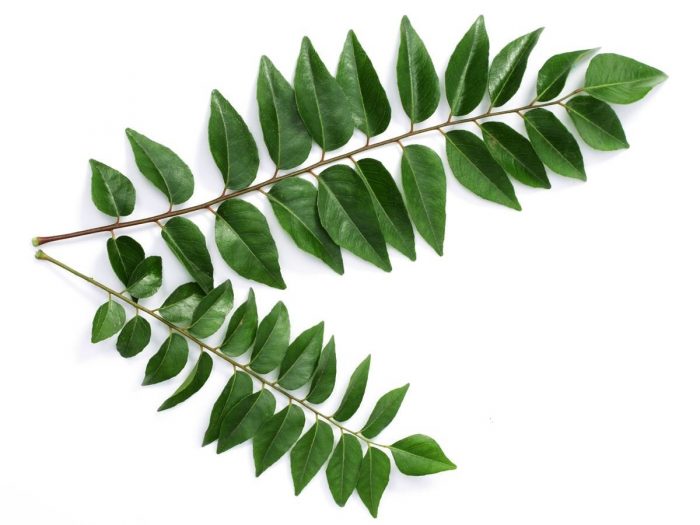
Health Benefits of Curry Leaves

Curryleaves

Curry leaves are natural flavouring agents with a number of important health benefits, which makes your food both healthy and tasty along with pleasing aroma. They contain various antioxidant properties and have the ability to control diarrhea, gastrointestinal problems such as indigestion, excessive acid secretion, peptic ulcers, dysentery, diabetes and an unhealthy cholesterol balance. They are also believed to have cancer fighting properties and are known to help protect the liver.
Scientific Information: The scientific name of the curry plant is Murraya Koenigii Spreng and it belongs to theRutaceae family. The plant is native to India and is usually found in tropical and subtropical regions. It is cultivated in various other countries such as China, Australia, Nigeria and Ceylon. Height of the plant ranges from small to medium. The most useful parts of this plant are the leaves, root and the bark.
In Ayurvedic medicine, curry leaves are believed to have several medicinal properties such as anti-diabetic, antioxidant, antimicrobial, anti-inflammatory, anti-carcinogenic and hepato-protective (capability to protect liver from damage) properties. The roots are used for treating body aches and the bark is used for snake bite relief.
The leaves, with their vast herbal properties, are used in various local cuisines across India and other parts of Asia as flavoring agents. Curry leaves resemble ‘neem’ or Indian lilac and their name in most Indian languages translates to ‘sweet neem’.